
Water corruption
Updated 21 July, 2026 The section below is a summary about Tiaki Wai, the new water infrastructure Company. Overview Concerns Calls for caution The Gene Technology Bill if adopted will deregulate biotechnology in New Zealand. It would remove labeling requirements for genetically modified (GM) products and treat GM techniques as safe by default. This represents a major policy shift away from precaution and transparency. The bill aligns NZ with global biotech and corporate interests, rather than protecting local independence, environment, and food integrity. The biotech sector has a history of failed promises, most recently the mRNA COVID-19 vaccines that was promoted as safe and effective but shown to have caused harm. Despite the industry’s connection to health dangers, biotech firms are now seeking new markets in agriculture and food production. New Zealand’s Gene technology bill will help to accomodate this if enacted. Companies are lobbying for weaker safety rules to cut costs and accelerate experimentation. A major concern is that the government are trusting corporate science without adequate independent oversight. The position we have is New Zealand need to reject the bill and maintain strong biosafety and labelling laws. This means a ban on gene editing and gain-of-function research, due to the ethical and ecological risks that come with such allowances. A return to natural food systems and independent scientific evaluation of biotechnology claims. The Gene Technology issue as a turning point for New Zealand national sovereignty, and the stakes are high. Once Pandora’s box has been opened, reversal of the effects of certain biotechnologies cannot be reversed. IMPORTANT INFORMATION (What govt. and mainstream media aren’t saying) The Gene technology bill isn’t about passing one law, it is about a whole system of changes quietly working together in a regulatory type of lockstep. The Gene tech bill is proposing to completely deregulate GMO into Farming systems, medical applications, and more importantly – your food. It will give corporations more control over food supply. They will have no liability. No traceability. And they will pass on the cost of any GMO contamination to YOU, the tax payer. And at exactly the same time, the NZ food safety authority is laying the groundwork for labelling requirements for GMO in your food products. Specifically, proposal P1055 is updating how gene technology, and new breeding techniques, are defined under New Zealand food law. Essentially this is redrawing the boundaries as to what counts as genetically engineered food, so they don’t need to relabel it anymore, even though it is genetically modified. So just to be clear here, the reason they’re saying they don’t need to label it anymore is because they’re saying they’re using modern gene editing methods, so they’re not considering it as genetically modified So they can bypass labelling or premarket safety checks. Not only is this dishonest, but it makes it harder for consumers to know what is in their food and it takes away your right to choose. Biosecurity minister Andrew Hoggard is the one in charge of how transparent your GMO labels are. Meanwhile the Ministry for primary industries are calling for the raising of acceptable limits of glyphosate by 100 times. This lines up with making GMO herbicide resistant crops easier to get into the soil of new zealand. On top of that, the RMA reforms are removing precautionary principles against genetically engineered organisms and stripping away those safeguards that protect ratepayers. That means communities have less say, less protection and more risk offloaded onto the public. All of these changes work together. They reshape how our food is grown, who owns it, who controls it, and how honest your food labelling is. Updated discussion on the Gene Technology Bill October 9, 2025
Roadside Drug test (Nigel Gray’s OIA work)
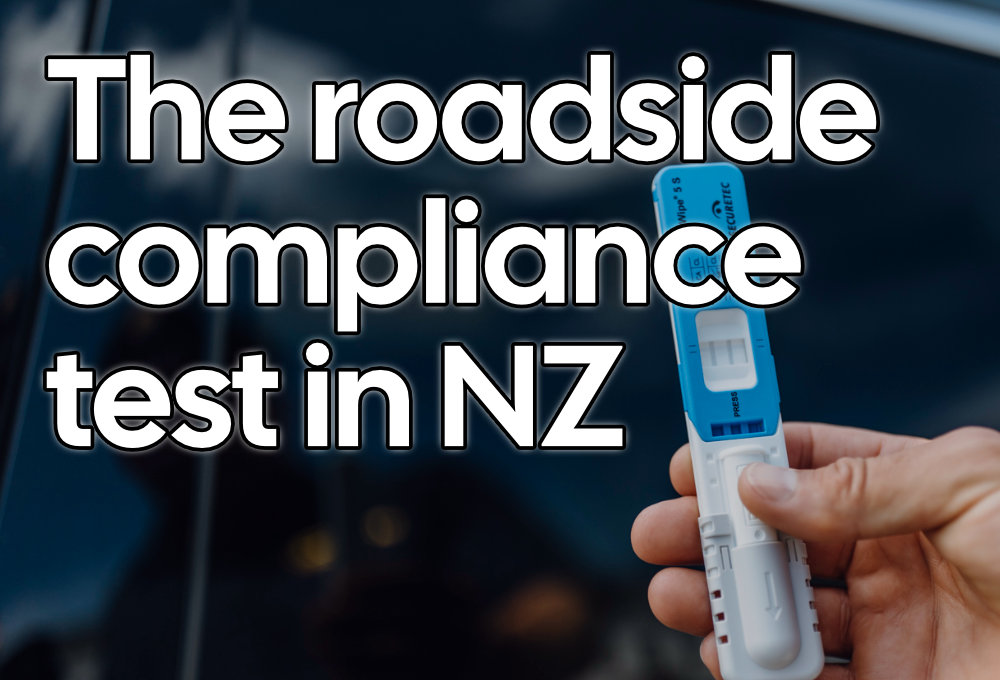
Updated 22 May, 2026 The section below the overview is a reverse chronological posting of researcher Nigel Gray’s work on the Roadside drug test. Nigel has a website https://vivavictorius.yolasite.com where he shows you how to interact with the police during a roadside drug test. Overview Concerns The Roadside drug test pushed by Transport minister Chris Bishop has numerous questions surrounding it’s validity and credibility since it was rolled out in Wellington in late December. It would require drivers to submit to an oral fluid saliva test for detecting the presence of Cannabis, Methamphetamine, Ecstasy and Cocaine. This test does not test for impairment and when detecting for presence it has a 10% false positive rate. There are also a number of other issues, and researcher Nigel Gray has been diligently collecting and raising those issues. Please see below for transcripts of his postings related to this topic. The 3S Drugwipe device by Securetech, is a device that exchanges chemicals with the bodies of drivers that submit to the test and refusal to participate in this exchange results in 75 demerit points, a $400 fine and a 12 hours impounding of the driver’s vehicle. In addition, legislation like the Bill of Rights and Privacy Act appear to be in breach and yet the New Zealand Police and Government fail to acknowledge this. Furthermore, this is a test that is coercive and will leave a number of people feeling frustrated and humiliated with an increasing loss of trust in the Police. Nigel Gray’s roadside drug test research (click to expand) 19 May: Oral Fluid Testing – What police admitted, denied, and document revelations By Nigel Gray 19 May 2026 PLEASE SHARE PLEASE DON’T MISS READING THE UPDATE AT THE BOTTOM….IT IS NOT TO BE MISSED! Over the last two weeks I have been requesting basic, legally‑required information from NZ Police about the chemical composition, safety data, and biological properties of the new roadside drug‑testing devices now being used across the country.Today, Police responded.And the response is — frankly — astonishing.Because while Police refused large parts of the request, claiming documents “do not exist”, they also accidentally released internal training documents that directly contradict their own OIA answers.This update sets out: what I asked for what Police claimed what their own documents show and why this matters for public safety, privacy, and legal compliance 1. What I asked Police for I asked for: Safety Data Sheets (SDS) for the oral‑fluid devices chemical composition of the buffer and preservatives hazard classifications manufacturer documentation any internal risk assessments any DNA‑related documentation any privacy or legal assessments any correspondence with manufacturers retention, disposal, and secondary‑use policies These are standard, basic documents for any biological sampling system. 2. What Police claimed in their OIA response Police claimed: A. THEY HAVE NO SDS OR CHEMICAL DOCUMENTATION BEYOND WHAT IS ON THEIR WEBSITE. (But the website does not contain SDS for Quantisal or the buffer.) B. THEY HAVE NO DOCUMENTATION ABOUT DNA PRESERVATION, DEGRADATION, OR STABILITY. They refused this under s18(e): “document does not exist.” C. THEY HAVE NEVER CONDUCTED ANY INTERNAL DISCUSSIONS, LEGAL ASSESSMENTS, OR PRIVACY ASSESSMENTS REGARDING DNA IN SALIVA SAMPLES. D. THEY HAVE NO DOCUMENTATION GOVERNING SECONDARY USE, RETENTION, OR RESEARCH USE OF SAMPLES. E. THEY WITHHELD ALL MANUFACTURER CORRESPONDENCE UNDER “COMMERCIAL PREJUDICE.” F. THEY DID NOT ANSWER THE REQUIRED S23 QUESTIONS ABOUT WHETHER INFORMATION WAS NEVER HELD, NOT HELD, OR REFUSED. In short: Police claim they hold almost nothing. 3. What Police’s own training documents reveal Police accidentally released: the OFT National District Training PowerPoint, and the OFT Lesson Plan These documents contain dozens of internal procedures, assessments, and instructions that contradict Police’s OIA claims.Here are the most serious contradictions. **Contradiction 1 — Police claim no internal assessments exist. Their training documents contain internal assessments everywhere.**The lesson plan includes: internal procedures internal safety protocols internal device‑handling instructions internal biological‑sample handling instructions internal disposal protocols internal chain‑of‑custody steps internal TENR risk assessments internal scenario‑based assessments Police told me none of this exists.Their own documents prove otherwise. **Contradiction 2 — Police claim no DNA‑related documentation exists. Their training documents show biological‑sample handling protocols.**Examples: “Officers must wear disposable gloves when undertaking testing or collection of saliva.” “Check that sufficient oral fluid has been obtained for an approved analyst to carry out their analysis.” “Follow the instructions provided for the oral fluid collection.”These are biological‑sample handling protocols.You cannot have biological‑sample handling protocols without underlying technical documentation. **Contradiction 3 — Police claim no documentation exists about retention or secondary use. Their training documents describe retention, disposal, and elective samples.**Examples: elective samples sample retention for independent testing sample disposal rules sample sufficiency checks sample transfer to PHF Science sample chain‑of‑custody steps Police refused this under s18(e) — “document does not exist.”Their own documents show it does. **Contradiction 4 — Police claim all SDS and technical documentation are already publicly released. Their training documents reference multiple technical documents not in the proactive release.**Examples: Device instruction guides Temperature‑controlled storage requirements Troubleshooting documentation Manufacturer’s instructions Device handling protocols None of this appears in the proactive release.This means Police do hold technical documentation they refused to release. **Contradiction 5 — Police claim no manufacturer documentation exists. Their training documents explicitly reference manufacturer instructions.**The lesson plan states: “Follow the instructions provided for the oral fluid collection.” “Officers must follow the manufacturer’s instructions.”This is direct evidence that Police hold manufacturer documentation.Yet they refused it under s18(e). **Contradiction 6 — Police claim no privacy or legal assessments exist. Their training documents show structured internal decision‑making frameworks.**Examples: TENR risk assessments CIT transition rules crash‑specific pathways disposal rules chain‑of‑custody protocols These are internal assessments.Police claimed none exist. **Contradiction 7 — Police claim no documentation exists regarding DNA stability or buffer chemistry. But the devices used (Quantisal) are ISO‑validated forensic devices with published technical documentation.**Police claim the manufacturer never provided: DNA stability information buffer composition biological preservation data toxicology validation studies This is implausible.Quantisal documentation is standard in forensic toxicology.If Police genuinely never requested it, that is a serious HSWA breach.If they did request it
Roadside Drug Testing – an intrusion of civil liberties
Updated 19 April, 2026 The section below outlines some of the issues around the Land Transport Roadside 3S Drugwipe drug tests and saliva kits. Why it’s insulting What is the test? Drugs tested & penalties WHY THIS TEST IS INSULTING TO NEW ZEALANDERS This is a test that coerces compliance, does not test for impairment, it has a false-positive and false-negative readings track record, and it will disrupt the lives of many law-abiding New Zealanders simply for refusing to comply with something they do not trust, or for taking prescription medicine drugs that happen to be on a list of banned substances. With the amount of deaths attributed to drug impairment (about 100) vs. the number of licensed New Zealand drivers (3.5 million) and international visiting drivers (2.5 million) driving in New Zealand every year, the chances on any given day of somebody unimpaired causing an accident due to drug impairment are ridiculously low. The punishment government policy inflicts for a positive test or non-compliance is completely imbalanced and unjustified. And this drug testing policy, coming from politicians who, on average, take home more than 8 times the income of the poorest 50% of adult New Zealanders and that is before member of parliament accommodation and travel perks kick in. The 3S Drugwipe test by Securetec was first approved for release in March 2015 and has a known false-positive and negative track record that has produced unwarranted problems for innocent motorists from over the last 10 plus years. It is also a ‘presence’ test and not an ‘impairment test’, making the results of these particular tests meaningless when it comes to aligning with the Minister of Transport’s objectives. Road deaths account for about 1% of all deaths per year, and while any road death is not a good death, we need some context around it. There are some 3.5 million licenced drivers in New Zealand and an extra 2 plus million international visitors per year who opt to drive by vehicle while travelling in the country. Therefore out of some 6 million drivers on the roads in New Zealand each year, 100 deaths could be related to some form of drug impairment but not necessarily. ‘Presence’ is tested for, but not impairment. The primary factors weighed up in road driving fatalities have been noted as Driver age, lack of sleep, and smart devices or screens (see the 16 minute, 43 second mark in the video) COVID-19 CAUSED LOSS OF TRUST IN POLICE AND GOVERNMENT 2020 was the year of COVID-19 and eventually, the COVID vaccine – where millions of New Zealanders were coerced into taking an experimental drug in order to maintain their employment and access to restaurants and places of recreation. What the New Zealand Government have failed to acknowledge is that those who were marginalised at the time for not complying, or those who did comply and ended up getting sick, or worse – have reached a point where they will not trust any government directive whatsoever, especially one that requires they place a government sanctioned device with chemical reagents, into their mouth. A PURPOSEFUL AND TARGETED PUNISHMENT? Refusal of the Roadside drug test is an instant fine of $400 dollars and 75 demerit points. If one were to hold the Government to previous discriminatory behaviour (see COVID-19), it can be argued that this roadside drug test is not about keeping New Zealand’s roads safe, but about pinpointing those who have very little or no trust in Government, and finding a way to punish them and diminish their freedom by restricting their mobility. Roadside drug testing (Oral Fluid Testing) is being implemented in New Zealand by Police, with a full nationwide rollout expected by mid-2026. It allows officers to randomly test for the presence o f four key drugs: THC (cannabis), methamphetamine, MDMA (ecstasy), and cocaine. How It Works The Test: A rapid screening device (tongue swipe) is used, taking about 10 minutes to produce results. Positive Result: If the initial test is positive, a second, identical test is conducted. If the second test is also positive, you will be barred from driving for 12 hours. Evidential Sample: If positive, a further saliva sample is collected and sent to a laboratory to test for 25 different ‘qualifying drugs’. Negative Result: If the initial test is negative, you are generally free to go. Drugs Tested and Detection Times The roadside tests are designed to detect recent use rather than just historical consumption. Estimated detection windows for saliva tests can vary, but generally include: THC (Cannabis): Up to 12 hours (infrequent users) to 72 hours (frequent users). MDMA (Ecstasy): 2–4 days. Methamphetamine: 1–4 days. Cocaine: 12–48 hours. Penalties Infringement Notice: If a lab test confirms the presence of drugs above specified thresholds, you will receive an infringement notice, which carries a $200 fine and 50 demerit points (for one drug) or a $400 fine and 75 demerit points (for two or more drugs). Refusal: Refusing a test results in an immediate 12-hour ban, a $400 fine, and 75 demerit points. Criminal Charges: A blood test may be required if you are involved in an accident, fail a Compulsory Impairment Test (CIT), or are unable to provide a saliva sample. A failed blood test can lead to criminal charges, including potential imprisonment or a fine of up to $4,500. Medication and Medicinal Cannabis Prescriptions: A medical defence is available if you have a valid prescription and took the medication as directed, but this applies after an infringement notice is issued, not at the roadside. Driving ban: Even with a prescription, if you fail the roadside saliva tests, you will still be banned from driving for 12 hours. ADHD Medication: Police have stated that the roadside screening devices do not test for amphetamines, so medications like Ritalin or Concerta should not trigger a positive result at the roadside. Medicinal Cannabis: Most medicinal cannabis containing THC will test positive on a roadside test. CBD-only products will not. Key Takeaways No “Good Cause”
Is roadside drug testing lawful?

Updated 20 December, 2025 When Parliament passed the Land Transport (Drug Driving) Amendment Bill – it paved the way for randomised roadside drug testing where oral fluid drug testing can legally take place on New Zealand roads. In December 2025, the New Zealand police began a DrugWipe 3S device roadside drug testing campaign, starting deployment in greater Wellington in December 2025 and due to spread to the rest of the country in 2026. Arguments against the rollout of the roadside drug testing. Click on these points below and memorise as much as you can. It may come in handy. A ‘positive’ test isn’t correlated with ‘guilty’ or ‘physical impairment’ The New Zealand police are carrying out these tests without: performing a physical sobriety test first (the point of this campaign is supposed to be to reduce accidents so why go straight to a test that has a track record of false positives?) disclosure of the device’s reliability limits disclosure of other substances capable of causing false positives confirmation of calibration, storage, or expiry mentioning the implications of positive testing Full disclosure of chemicals released by the DrugWipe 3S devices are not disclosed Before undergoing any invasive test, New Zealanders have the right to know every compound and ingredient on that test. The New Zealand Police, at this point, have not disclosed: The full list of materials and compounds used in the pad. Any chemicals, reagents, preservatives, or stabilisers present. Any biological agents, antibiotics, or antimicrobial substances contained in or applied to the pad. Any known health risks, side effects, or contraindications associated with use of the pad. Copies of safety data sheets (SDS), manufacturer specifications, or certification documents relating to the pad. Any internal Police or Ministry of Transport documentation assessing health or safety risks of the pad. Details of **health and safety procedures** followed by Police during roadside drug testing, including: Hygiene protocols for administering the test. Training provided to officers on safe handling of the pad. Procedures for managing individuals with medical conditions or vulnerabilities. Any risk assessments or occupational safety guidelines applied to officers and members of the public during testing. This test has a history of false positives and false negatives In other words… completely useless In 2015, the Securetec DrugWipe 3 S device when tested in the UK revealed that every second person tested positive in December of that year when screened with the device. Before beginning their own campaign in December 2025, New Zealand had to know about these false results. which begs the question, why are they still doing it? The manufacturer say that their tests have a 95% success rate, but even then, that would mean 1/20 people would be falsely accused of something they haven’t done. What assurances do the New Zealand Police and Minister of Transport have that similar false positives won’t happen? Who bears the cost of that? How much will all this cost? There is no absolute disclosure as to whether DNA is taken and stored after the test The New Zealand Police, at this point, have not disclosed: What happens to saliva samples sent away for analysis. Is DNA extracted and stored somewhere? (Is personal privacy being invaded) How much does this analysis process cost each time? What correlation does any result have with a driver’s impairment on New Zealand roads? Intimidation is being used by Police officers at every test site As a driver of a vehicle in New Zealand, you will know at very short notice what is about to happen before a drug or alcohol test because you will meet a lineup of at least 5 police cars and officers waving to pull you over. The message here is STOP or you will be criminalised, despite not having actually committed a crime. Therefore your stopping is one that is taking place by coercion, not genuine consensual agreement. And from there, it is up to the police officer’s discretion as to whether you are criminalised or not. They do not guarantee fair testing or a promise not to commit foul play; you are at their mercy, and their judgment will assume the tests are fully reliable. This is a scenario that will not be accepted by the public as more and more become aware of what is taking place. Criminalising and disadvantaging more New Zealanders who aren’t committing actual crimes Trust in Government continues to fall You are immediately criminalised if you refuse to take a roadside oral fluid drug test. It’s an on the spot $400 fine and 75 demerit points for simply refusing the test, which requires each individual to lick a chemically activated object and provide it saliva containing DNA. Over 50% of New Zealanders in a 2023 OECD survey declared either a Neutral or Low to no trust in the New Zealand Government, with even less supporting the coalition majority National Party (41%), which means that over half of New Zealanders potentially would be averse to following a Government mandate such as submitting to an invasive roadside drug test. This is especially so after the COVID-19 response divided the country and created individuals who now permanently distrust the Government. If someone refuses the test, they will be issued a $400 fine as well as 75 demerit points. For context, a loss of 100 demerit points means a loss of licence. This is discrimination against those who already have little or no trust in the Government, because they do not believe in the measures being applied. For context, if you accrue over 100 demerit points in any 2 year period, that is an automatic driving suspension for 3 months. With the loss of mobility as well as the added costs of a $400 fine and extra transport / babysitting / caregiving costs resulting from such a burden, what is the cost to New Zealanders affected by this? Violation of foundational New Zealand Legislation Are New Zealand Police violating human rights? By threatening fines and demerit points for non-compliance, are
Electromagnetic Radiation Poisoning

Return to Government Sponsored Harm Page LATEST UPDATE, 11 JUNE 2025 Tests conducted in the United States compared rural and non-rural areas highlighted the difference in mortality rates between rural states and metropolitan areas, with cities having higher rates of mortality. The data sets showed that there is no excess mortality in the 85+ age group in rural areas, while there is a significant increase in mortality rates in metropolitan areas. These excess deaths coincided with 5G (5th Generation technology) rollouts in city areas. Link: During the meeting, Dr. Robert Young and Anders Brunstad presented data sets that showed a correlation between excess mortality rates in the United States and 5G electromagnetic microwave radiation frequencies. No GENUINE long term safety data of effects of high EMF radiation on New Zealanders (or anyone, really): Current Situation: New Zealand’s Ministry of Health claim that “Measurements on 5G sites show that exposures are similar to or lower than those from existing cellular technologies” however other studies claim otherwise. How do we ascertain which side is correct? Conflicts of Interest 5G and succeeding technologies are heavily tied to ‘The Internet of Things’ (IOT) which is a technology infrastructure forecast to heavily feature into the government infrastructure plans of all future governments. This will allow people and situations to be analysed and managed in real time. It is the increased bandwidth and hence, radiation, that will allow surveillance technologies to monitor and even control things remotely. QUESTION: If 5G and succeeding technology is crucial to the deployment of this infrastructure, would Government institutions be completely honest about potential health effects connected to such technology? Profits to be made The amount of money to be generated from this technology by telcos and infrastructure developers like Chorus, Spark, One NZ, and their board members make it very tempting to collate data that softens any particular negative health effects that 5G and succeeding technologies may actually have. Public Consultation: 5G implementation was never consulted with the general public. It was decided upon in board rooms and back offices. This demonstrates a lack of transparency and disclosure. What should the public’s stance be?This comes down to informed consent and personal choice. Informed consent cannot, however, be made by the public because negative research findings about 5G have not been shared with the public and / or dismissed by conflicted parties (Government, telcos, media) as irrelevant. Our stance is that all information about 5G technology (positive and negative) should be tabled and public debate must happen openly in order for the parameters of informed public consent to be achievable.
NZ Government want to increase allowed Glyphosate levels

Return to Previous Page LATEST UPDATE, 15 MAY 2025 New Zealand Food Safety is considering raising the maximum residue level (MRL) for glyphosate in certain foods, particularly grains and peas. The proposal is to increase the MRL from the current default of 0.1 mg/kg to 10 mg/kg for wheat, barley, and oats, and 6 mg/kg for dry field peas, according to Farmers Weekly and Organics Aotearoa New Zealand. Glyphosate is a herbicide used in agriculture, and its presence in food can raise concerns about potential health impacts and dietary exposure, according to the Ministry for Primary Industries. Elaboration: Current Situation: New Zealand Food Safety, under the authority of the Ministry for Primary Industries (MPI) and in collaboration with Food Standards Australia New Zealand (FSANZ), is proposing to adjust the MRL for glyphosate in specific food products. Proposed Increase: The proposal aims to increase the allowable levels of glyphosate residues in wheat, barley, oats, and dry field peas. Concerns and Justification: The increase in MRL is being proposed based on the use of glyphosate as a pre-harvest desiccant on crops like wheat, oats, barley, and peas. This practice can speed up drying, but it also results in higher glyphosate residues in the final products. Public Consultation: Organics Aotearoa New Zealand is urging people to submit their opinions on the proposed changes to the MRL. Safety Assessment:New Zealand Food Safety has previously stated that it aligns with the conclusions of the Food and Agriculture Organization/World Health Organization (JMPR) reports, which have assessed glyphosate’s dietary risk as very low, according to the Ministry for Primary Industries.
Major US study confirms link between fluoride and lower IQs

Fluoride Free New Zealand says the study
confirms many children are at risk from exposure to fluoridated water