
Water corruption
Updated 21 July, 2026 The section below is a summary about Tiaki Wai, the new water infrastructure Company. Overview Concerns Calls for caution The Gene Technology Bill if adopted will deregulate biotechnology in New Zealand. It would remove labeling requirements for genetically modified (GM) products and treat GM techniques as safe by default. This represents a major policy shift away from precaution and transparency. The bill aligns NZ with global biotech and corporate interests, rather than protecting local independence, environment, and food integrity. The biotech sector has a history of failed promises, most recently the mRNA COVID-19 vaccines that was promoted as safe and effective but shown to have caused harm. Despite the industry’s connection to health dangers, biotech firms are now seeking new markets in agriculture and food production. New Zealand’s Gene technology bill will help to accomodate this if enacted. Companies are lobbying for weaker safety rules to cut costs and accelerate experimentation. A major concern is that the government are trusting corporate science without adequate independent oversight. The position we have is New Zealand need to reject the bill and maintain strong biosafety and labelling laws. This means a ban on gene editing and gain-of-function research, due to the ethical and ecological risks that come with such allowances. A return to natural food systems and independent scientific evaluation of biotechnology claims. The Gene Technology issue as a turning point for New Zealand national sovereignty, and the stakes are high. Once Pandora’s box has been opened, reversal of the effects of certain biotechnologies cannot be reversed. IMPORTANT INFORMATION (What govt. and mainstream media aren’t saying) The Gene technology bill isn’t about passing one law, it is about a whole system of changes quietly working together in a regulatory type of lockstep. The Gene tech bill is proposing to completely deregulate GMO into Farming systems, medical applications, and more importantly – your food. It will give corporations more control over food supply. They will have no liability. No traceability. And they will pass on the cost of any GMO contamination to YOU, the tax payer. And at exactly the same time, the NZ food safety authority is laying the groundwork for labelling requirements for GMO in your food products. Specifically, proposal P1055 is updating how gene technology, and new breeding techniques, are defined under New Zealand food law. Essentially this is redrawing the boundaries as to what counts as genetically engineered food, so they don’t need to relabel it anymore, even though it is genetically modified. So just to be clear here, the reason they’re saying they don’t need to label it anymore is because they’re saying they’re using modern gene editing methods, so they’re not considering it as genetically modified So they can bypass labelling or premarket safety checks. Not only is this dishonest, but it makes it harder for consumers to know what is in their food and it takes away your right to choose. Biosecurity minister Andrew Hoggard is the one in charge of how transparent your GMO labels are. Meanwhile the Ministry for primary industries are calling for the raising of acceptable limits of glyphosate by 100 times. This lines up with making GMO herbicide resistant crops easier to get into the soil of new zealand. On top of that, the RMA reforms are removing precautionary principles against genetically engineered organisms and stripping away those safeguards that protect ratepayers. That means communities have less say, less protection and more risk offloaded onto the public. All of these changes work together. They reshape how our food is grown, who owns it, who controls it, and how honest your food labelling is. Updated discussion on the Gene Technology Bill October 9, 2025
Roadside Drug test (Nigel Gray’s OIA work)
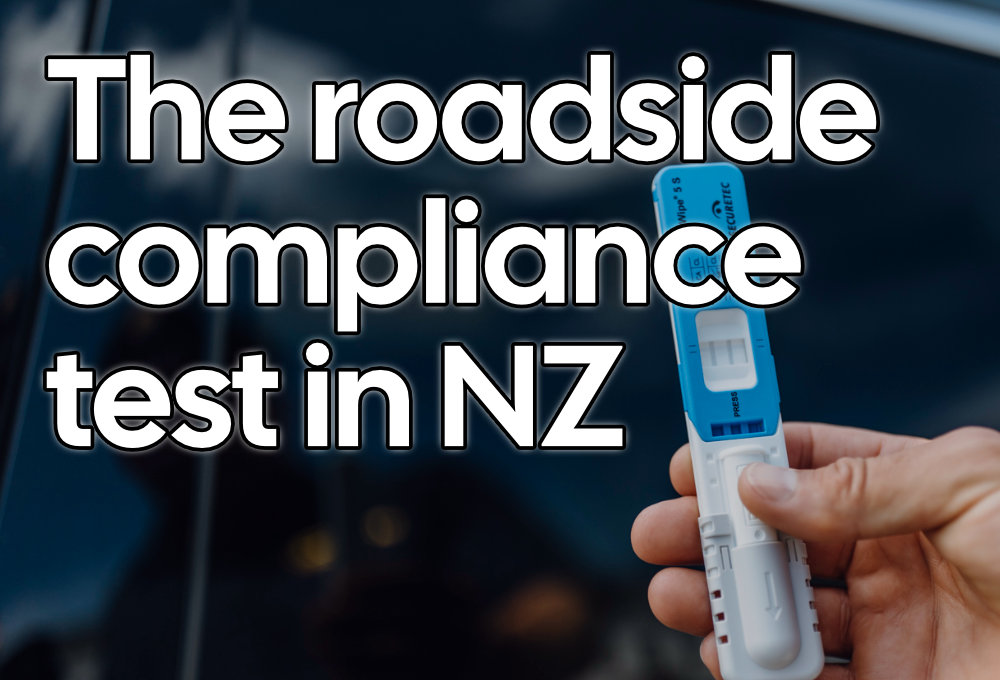
Updated 22 May, 2026 The section below the overview is a reverse chronological posting of researcher Nigel Gray’s work on the Roadside drug test. Nigel has a website https://vivavictorius.yolasite.com where he shows you how to interact with the police during a roadside drug test. Overview Concerns The Roadside drug test pushed by Transport minister Chris Bishop has numerous questions surrounding it’s validity and credibility since it was rolled out in Wellington in late December. It would require drivers to submit to an oral fluid saliva test for detecting the presence of Cannabis, Methamphetamine, Ecstasy and Cocaine. This test does not test for impairment and when detecting for presence it has a 10% false positive rate. There are also a number of other issues, and researcher Nigel Gray has been diligently collecting and raising those issues. Please see below for transcripts of his postings related to this topic. The 3S Drugwipe device by Securetech, is a device that exchanges chemicals with the bodies of drivers that submit to the test and refusal to participate in this exchange results in 75 demerit points, a $400 fine and a 12 hours impounding of the driver’s vehicle. In addition, legislation like the Bill of Rights and Privacy Act appear to be in breach and yet the New Zealand Police and Government fail to acknowledge this. Furthermore, this is a test that is coercive and will leave a number of people feeling frustrated and humiliated with an increasing loss of trust in the Police. Nigel Gray’s roadside drug test research (click to expand) 19 May: Oral Fluid Testing – What police admitted, denied, and document revelations By Nigel Gray 19 May 2026 PLEASE SHARE PLEASE DON’T MISS READING THE UPDATE AT THE BOTTOM….IT IS NOT TO BE MISSED! Over the last two weeks I have been requesting basic, legally‑required information from NZ Police about the chemical composition, safety data, and biological properties of the new roadside drug‑testing devices now being used across the country.Today, Police responded.And the response is — frankly — astonishing.Because while Police refused large parts of the request, claiming documents “do not exist”, they also accidentally released internal training documents that directly contradict their own OIA answers.This update sets out: what I asked for what Police claimed what their own documents show and why this matters for public safety, privacy, and legal compliance 1. What I asked Police for I asked for: Safety Data Sheets (SDS) for the oral‑fluid devices chemical composition of the buffer and preservatives hazard classifications manufacturer documentation any internal risk assessments any DNA‑related documentation any privacy or legal assessments any correspondence with manufacturers retention, disposal, and secondary‑use policies These are standard, basic documents for any biological sampling system. 2. What Police claimed in their OIA response Police claimed: A. THEY HAVE NO SDS OR CHEMICAL DOCUMENTATION BEYOND WHAT IS ON THEIR WEBSITE. (But the website does not contain SDS for Quantisal or the buffer.) B. THEY HAVE NO DOCUMENTATION ABOUT DNA PRESERVATION, DEGRADATION, OR STABILITY. They refused this under s18(e): “document does not exist.” C. THEY HAVE NEVER CONDUCTED ANY INTERNAL DISCUSSIONS, LEGAL ASSESSMENTS, OR PRIVACY ASSESSMENTS REGARDING DNA IN SALIVA SAMPLES. D. THEY HAVE NO DOCUMENTATION GOVERNING SECONDARY USE, RETENTION, OR RESEARCH USE OF SAMPLES. E. THEY WITHHELD ALL MANUFACTURER CORRESPONDENCE UNDER “COMMERCIAL PREJUDICE.” F. THEY DID NOT ANSWER THE REQUIRED S23 QUESTIONS ABOUT WHETHER INFORMATION WAS NEVER HELD, NOT HELD, OR REFUSED. In short: Police claim they hold almost nothing. 3. What Police’s own training documents reveal Police accidentally released: the OFT National District Training PowerPoint, and the OFT Lesson Plan These documents contain dozens of internal procedures, assessments, and instructions that contradict Police’s OIA claims.Here are the most serious contradictions. **Contradiction 1 — Police claim no internal assessments exist. Their training documents contain internal assessments everywhere.**The lesson plan includes: internal procedures internal safety protocols internal device‑handling instructions internal biological‑sample handling instructions internal disposal protocols internal chain‑of‑custody steps internal TENR risk assessments internal scenario‑based assessments Police told me none of this exists.Their own documents prove otherwise. **Contradiction 2 — Police claim no DNA‑related documentation exists. Their training documents show biological‑sample handling protocols.**Examples: “Officers must wear disposable gloves when undertaking testing or collection of saliva.” “Check that sufficient oral fluid has been obtained for an approved analyst to carry out their analysis.” “Follow the instructions provided for the oral fluid collection.”These are biological‑sample handling protocols.You cannot have biological‑sample handling protocols without underlying technical documentation. **Contradiction 3 — Police claim no documentation exists about retention or secondary use. Their training documents describe retention, disposal, and elective samples.**Examples: elective samples sample retention for independent testing sample disposal rules sample sufficiency checks sample transfer to PHF Science sample chain‑of‑custody steps Police refused this under s18(e) — “document does not exist.”Their own documents show it does. **Contradiction 4 — Police claim all SDS and technical documentation are already publicly released. Their training documents reference multiple technical documents not in the proactive release.**Examples: Device instruction guides Temperature‑controlled storage requirements Troubleshooting documentation Manufacturer’s instructions Device handling protocols None of this appears in the proactive release.This means Police do hold technical documentation they refused to release. **Contradiction 5 — Police claim no manufacturer documentation exists. Their training documents explicitly reference manufacturer instructions.**The lesson plan states: “Follow the instructions provided for the oral fluid collection.” “Officers must follow the manufacturer’s instructions.”This is direct evidence that Police hold manufacturer documentation.Yet they refused it under s18(e). **Contradiction 6 — Police claim no privacy or legal assessments exist. Their training documents show structured internal decision‑making frameworks.**Examples: TENR risk assessments CIT transition rules crash‑specific pathways disposal rules chain‑of‑custody protocols These are internal assessments.Police claimed none exist. **Contradiction 7 — Police claim no documentation exists regarding DNA stability or buffer chemistry. But the devices used (Quantisal) are ISO‑validated forensic devices with published technical documentation.**Police claim the manufacturer never provided: DNA stability information buffer composition biological preservation data toxicology validation studies This is implausible.Quantisal documentation is standard in forensic toxicology.If Police genuinely never requested it, that is a serious HSWA breach.If they did request it
Roadside Drug Testing – an intrusion of civil liberties
Updated 19 April, 2026 The section below outlines some of the issues around the Land Transport Roadside 3S Drugwipe drug tests and saliva kits. Why it’s insulting What is the test? Drugs tested & penalties WHY THIS TEST IS INSULTING TO NEW ZEALANDERS This is a test that coerces compliance, does not test for impairment, it has a false-positive and false-negative readings track record, and it will disrupt the lives of many law-abiding New Zealanders simply for refusing to comply with something they do not trust, or for taking prescription medicine drugs that happen to be on a list of banned substances. With the amount of deaths attributed to drug impairment (about 100) vs. the number of licensed New Zealand drivers (3.5 million) and international visiting drivers (2.5 million) driving in New Zealand every year, the chances on any given day of somebody unimpaired causing an accident due to drug impairment are ridiculously low. The punishment government policy inflicts for a positive test or non-compliance is completely imbalanced and unjustified. And this drug testing policy, coming from politicians who, on average, take home more than 8 times the income of the poorest 50% of adult New Zealanders and that is before member of parliament accommodation and travel perks kick in. The 3S Drugwipe test by Securetec was first approved for release in March 2015 and has a known false-positive and negative track record that has produced unwarranted problems for innocent motorists from over the last 10 plus years. It is also a ‘presence’ test and not an ‘impairment test’, making the results of these particular tests meaningless when it comes to aligning with the Minister of Transport’s objectives. Road deaths account for about 1% of all deaths per year, and while any road death is not a good death, we need some context around it. There are some 3.5 million licenced drivers in New Zealand and an extra 2 plus million international visitors per year who opt to drive by vehicle while travelling in the country. Therefore out of some 6 million drivers on the roads in New Zealand each year, 100 deaths could be related to some form of drug impairment but not necessarily. ‘Presence’ is tested for, but not impairment. The primary factors weighed up in road driving fatalities have been noted as Driver age, lack of sleep, and smart devices or screens (see the 16 minute, 43 second mark in the video) COVID-19 CAUSED LOSS OF TRUST IN POLICE AND GOVERNMENT 2020 was the year of COVID-19 and eventually, the COVID vaccine – where millions of New Zealanders were coerced into taking an experimental drug in order to maintain their employment and access to restaurants and places of recreation. What the New Zealand Government have failed to acknowledge is that those who were marginalised at the time for not complying, or those who did comply and ended up getting sick, or worse – have reached a point where they will not trust any government directive whatsoever, especially one that requires they place a government sanctioned device with chemical reagents, into their mouth. A PURPOSEFUL AND TARGETED PUNISHMENT? Refusal of the Roadside drug test is an instant fine of $400 dollars and 75 demerit points. If one were to hold the Government to previous discriminatory behaviour (see COVID-19), it can be argued that this roadside drug test is not about keeping New Zealand’s roads safe, but about pinpointing those who have very little or no trust in Government, and finding a way to punish them and diminish their freedom by restricting their mobility. Roadside drug testing (Oral Fluid Testing) is being implemented in New Zealand by Police, with a full nationwide rollout expected by mid-2026. It allows officers to randomly test for the presence o f four key drugs: THC (cannabis), methamphetamine, MDMA (ecstasy), and cocaine. How It Works The Test: A rapid screening device (tongue swipe) is used, taking about 10 minutes to produce results. Positive Result: If the initial test is positive, a second, identical test is conducted. If the second test is also positive, you will be barred from driving for 12 hours. Evidential Sample: If positive, a further saliva sample is collected and sent to a laboratory to test for 25 different ‘qualifying drugs’. Negative Result: If the initial test is negative, you are generally free to go. Drugs Tested and Detection Times The roadside tests are designed to detect recent use rather than just historical consumption. Estimated detection windows for saliva tests can vary, but generally include: THC (Cannabis): Up to 12 hours (infrequent users) to 72 hours (frequent users). MDMA (Ecstasy): 2–4 days. Methamphetamine: 1–4 days. Cocaine: 12–48 hours. Penalties Infringement Notice: If a lab test confirms the presence of drugs above specified thresholds, you will receive an infringement notice, which carries a $200 fine and 50 demerit points (for one drug) or a $400 fine and 75 demerit points (for two or more drugs). Refusal: Refusing a test results in an immediate 12-hour ban, a $400 fine, and 75 demerit points. Criminal Charges: A blood test may be required if you are involved in an accident, fail a Compulsory Impairment Test (CIT), or are unable to provide a saliva sample. A failed blood test can lead to criminal charges, including potential imprisonment or a fine of up to $4,500. Medication and Medicinal Cannabis Prescriptions: A medical defence is available if you have a valid prescription and took the medication as directed, but this applies after an infringement notice is issued, not at the roadside. Driving ban: Even with a prescription, if you fail the roadside saliva tests, you will still be banned from driving for 12 hours. ADHD Medication: Police have stated that the roadside screening devices do not test for amphetamines, so medications like Ritalin or Concerta should not trigger a positive result at the roadside. Medicinal Cannabis: Most medicinal cannabis containing THC will test positive on a roadside test. CBD-only products will not. Key Takeaways No “Good Cause”
India’s Digital ID system a warning to New Zealand

By Mark Freeman. As New Zealand’s digital identification system is being set up, it’s useful to examine the case study of India, which has had such a system for over 15 years. What has the Indian experience of digital ID been like? In particular, what are the risks of such a system? The Indian system, called Aadhaar, is the world’s largest biometric ID system. Its centralised database was introduced in 2010, and now around 95% of India’s population have Aadhaar IDs. To get their ID numbers and cards, people give demographic and biometric data, undergoing scans of their irises and fingers, and, more recently, face authentication. One stated aim of the Aadhaar system is to allow more people—especially the poor—to access government services, such as food rations, and bank accounts. Other aims include increased convenience and elimination of fraud through fake identifies. However, there are major downsides to the system. ID effectively compulsory Having an Aadhaar number is not mandatory, but in effect it’s now essential for most Indian people. “Aadhaar was supposed to be voluntary, but it quickly became clear that living without it would be very difficult for most. Today, it is as good as compulsory. Most social benefits are out of reach without Aadhaar,” says a group of concerned Indian citizens and organisations called Progressive International. The Guardian reports that Indians need Aadhaar numbers to buy houses or cars, get jobs, open bank accounts, receive government benefits, get sim cards and admit children into school. An Indian privacy and technology researcher, Usha Ramanathan, says Indian people are bullied and scared into getting an Aadhaar ID. Once you’re in the system, you can’t opt out, she says. Exclusion Millions of Indian workers have been excluded from food rations and other welfare benefits because of authentication failures in Aadhaar. It’s claimed that a number of Indians have died of starvation because they couldn’t connect their food rationing cards to Aadhaar. The Tribune newspaper says the exclusions are not isolated glitches but rather systemic flaws disproportionately affecting marginalised people. Security risks The Aadhaar system has experienced many security breaches of data. In one incident in 2018, the details of 1.1 billion Indians on the database were found to be being sold online. Mass surveillance Another major concern is that Aadhaar enables mass surveillance. The Indian government is creating a searchable database that will track every aspect of residents’ lives. An investigation by HuffPost in 2020 found the system will automatically track when citizens move between cities, change jobs, buy new property and register when family members are born, get married or die. In October 2025, the database was not yet complete. However, the Indian government is already conducting mass surveillance on its citizens. The Central Monitoring System, launched in 2013, lawfully intercepts people’s private conservations according to threat perception. In December 2025, the Indian government ordered telecommunications companies to preinstall a government app on mobile phones made in, or imported into, India. One politician called it a snooping app. Aadhaar vs. New Zealand’s digital ID system New Zealand’s emerging digital ID system has stronger privacy protections on paper than Aadhaar. While Aadhaar is a centralised government system, New Zealand’s ID system will be mostly decentralised, giving people more control of their data. The data will be stored in an app on users’ devices. However, the Indian system gives us clues about the potential dangers of the New Zealand system. Effectively compulsory Aadhaar started as voluntary service but is now effectively mandatory. This could happen here. New Zealand privacy watchdog PILLAR predicts that in future essential services like welfare, driver licences and banking will only be accessible through digital ID. New Zealand First has introduced a private member’s bill to ensure physical identification remains a valid alternative to digital ID. Security risks Even though New Zealand’s system is not centralised, like Aadhaar, it still poses risks of privacy breaches. The system’s authentication system runs on the US-based cloud infrastructure of Microsoft Azure and Amazon AWS. Both companies are subject to US law, including US government surveillance capabilities. Exclusion Similar to India, people in New Zealand who are on low incomes, who are without compatible smartphones or who choose not to get a digital ID could be marginalised. “Access to essential services should never depend on whether someone adopts a government digital ID,” says PILLAR’s executive director Nathan Seiuli. Surveillance and monitoring potential Also as in India, use of digital IDs in New Zealand could lead to increased state surveillance since repeated ID use will produce a trail of metadata of users’ actions. The New Zealand government is already sharing our intercepted communications with other “Five Eyes” nations; we don’t need to give them more of our data. For more information on New Zealand’s digital identification system, see here.
Smart Cities

Updated 11 January, 2026 What a smart city is, how it is being applied, and some of the concerns around it. This is a living article so subject to change and modification in the future. Overview Definition A Smart City is defined by its architects an urban area that uses digital technology, data, and connected systems to improve how the city functions, with the goal of making services more efficient, sustainable, and responsive to residents’ needs. SMART is not officially an ancronym However, some organisations retrofit acronyms for explanatory purposes. You might encounter versions like: Sustainable Managed (or Measurable) Adaptive (or Automated) Responsive (or Resilient) Technology-enabled WEF Warning Much of New Zealand’s adopted international policy comes from the influence of the World Economic Forum. Both Labour and National Governments have deferred to WEF preferences when it comes to contingency planning and response and in relation to smart cities the World Economic Forum are talking tough. What actually defines a Smart City in practice according to its designers: A Smart City typically integrates: 1. Digital infrastructure IoT (Internet of Things) sensors (traffic, air quality, water, energy) Smart grids and smart meters Citywide data platforms 2. Data-driven decision-making Real-time traffic optimisation Predictive maintenance of infrastructure Evidence-based urban planning 3. Service optimisation Smart public transport systems Digital citizen services (permits, payments, reporting) Emergency response optimisation 4. Sustainability goals Energy efficiency Emissions reduction Water and waste optimisation 5. Citizen interaction Open data portals Apps for reporting issues Participatory planning tools Smart Cities – risks and safeguards Below is a comparison of Smart Cities vs surveillance concerns, grounded in New Zealand’s context, laws, and how these systems can actually be deployed. Surveillance concerns What Smart Cities say they’re doing Smart city programmes typically justify data collection under five broad goals: Intended purposes Efficiency: traffic flow, waste collection, energy use Safety: lighting, hazard detection, emergency response Sustainability: emissions, water use, climate resilience Planning: infrastructure investment based on evidence Service access: digital citizen services, accessibility improvements In New Zealand, councils usually frame smart tech as: “Operational optimisation and better public outcomes, not individual monitoring.” This distinction matters — but it’s where the tension begins. What creates surveillance concerns Surveillance concerns arise not from a single sensor, but from the combination of systems. The risk escalation path Passive data collection Traffic counters, air quality sensors, footfall sensors Generally low risk Identifiable data CCTV, number plate recognition (ANPR), Wi-Fi/Bluetooth tracking Moderate risk Linked datasets Transport + payments + location + time High risk Behavioural inference ( or interference, depending on how you see it) Predicting habits, movement patterns, associations Very high risk Most public controversy starts at levels 2–4, not level 1. Technology: Benefits vs Risk Key technologies: benefit vs risk Technology Smart city benefit Surveillance concern CCTV Crime deterrence, incident review Function creep, facial recognition ANPR (automatic number plate recognition) Traffic enforcement, stolen vehicles Movement tracking over time Public Wi-Fi Digital inclusion Device tracking, metadata logging IoT sensors Environmental insight Data aggregation risks Smart cards/apps Convenience Identity + behaviour linkage AI analytics Faster decisions Bias, opaque decision-making Important:Most NZ councils say they do not use facial recognition — but hardware is often capable, which raises governance questions. NZ Legal safeguards & limits New Zealand’s legal safeguards (and limits) Existing protections NZ relies on process-based safeguards, not blanket bans: Privacy Act 2020 Purpose limitation Data minimisation Transparency requirements Office of the Privacy Commissioner (OPC) Oversight, guidance, complaints Local Government Official Information and Meetings Act (LGOIMA) Transparency obligations Public Service data principles Stewardship, ethics, proportionality Where gaps exist No explicit prohibition on biometric surveillance by councils No national smart city data standard Limited public visibility into algorithmic decision-making Procurement often outsources data handling to private vendors In practice, governance quality varies by council, not by law. Function creep – “today’s band aid becomes tomorrow’s system” “Function creep” — the core public fear The biggest concern is not today’s use, but tomorrow’s reuse. Examples of function creep: Traffic cameras → law enforcement databases Footfall sensors → protest monitoring Transport cards → movement profiling Emergency powers → permanent systems Even if a system starts benign, policy can change faster than infrastructure. Lack of institutional trust The trust equation (critical in NZ) Smart city acceptance depends on institutional trust. High trust → higher tolerance Transparent purpose Clear opt-outs Strong iwi and community consultation Local data control Low trust → resistance Centralised data Vague language (“safety”, “efficiency”) Private vendors controlling analytics No sunset clauses Given declining trust in institutions (government, police, media), surveillance concerns are amplified, not theoretical. Māori data sovereignty (NZ-specific tension) A uniquely important NZ issue: Māori perspectives raise concerns about: Who owns data collected on whenua and people Whether iwi consent is meaningful or symbolic Data being extracted without reciprocal benefit Principles such as Te Mana Raraunga argue that: Data is a taonga Governance matters more than technology Smart cities must reflect Treaty obligations This is an area where NZ smart city frameworks are still evolving. Smart city versus Surveillance state – the real distinction Lorem ipsum Smart city vs surveillance state — the real distinction The difference is not technology, but governance. A city leans “smart” when it has: Explicit limits on data use Separation of datasets Independent oversight Data deletion timelines Community veto power A city drifts toward surveillance when it has: Permanent data retention Cross-agency data pooling Predictive policing Vendor-controlled analytics Weak transparency Same sensors. Very different outcomes. Bottom line Smart cities and surveillance are not opposites — they are adjacent possibilities. Smart cities can improve quality of life Surveillance emerges when: Data is identifiable Systems are linked Purposes expand Oversight weakens The question is not: “Is this a smart city?” But: “Who controls the data, for how long, and under whose authority?” Who would be overseeing and controlling the data? Below is a “map” of who controls/oversees data and how data governance is structured in Aotearoa New Zealand — especially in relation to future smart city expansion (e.g., Wellington’s sensor networks, Christchurch’s SmartView, and other city data
15 Minute Cities

Updated 7 January, 2026 The section below outlines what 15 minute cities are, how they differ from smart cities, and the possibilities that derive from them. Overview Urbanist Carlos Moreno‘s introduced the 15-minute city concept in 2016 as a way to ensure that urban residents can fulfil six essential functions within a 15-minute walk or bike ride from their dwellings: living, working, commerce, healthcare, education and entertainment. The framework of this model has four components; density, proximity, diversity and digitalization. The concept encourages a lifestyle where a person’s needs can be met within 15 minutes of their house, through walking, biking or public transport. Within these small hubs lie all the amenities needed for a community. An ideal picture of a 15-minute city’s scope 15 Minute City vs Smart City The fundamental difference The fundamental difference between 15-minute cities and Smart Cities is this: A 15-minute city is a human-centred urban design philosophy,whilea Smart City is a technology-centred urban management approach. They can overlap—but they are not the same thing, and one does not require the other… HOWEVER – in practical terms they will still almost certainly overlap. If the 15 minute city is the skeletal structure, the smart city is the heart, the lungs, and the essential internal organs that give that structure life. 15 Minute City 15-Minute Cities (Urban Form & Daily Life) Core question: How close are the things people need to where they live? What it is A planning concept where residents can reach most daily necessities—work, groceries, schools, healthcare, parks, and social life—within 15 minutes by walking or cycling. Key characteristics Focus on proximity, not technology Mixed-use neighbourhoods Reduced dependence on cars Encourages local economies and community life Primarily about land use, zoning, transport design Key desired outcomes Less consumption Less cars Less travel Less waste More compact cities and urban hubs More walking and biking More efficiency What a 15-minute city is not It does not require surveillance It does not require digital IDs It does not require data collection It does not restrict movement by design A 15-minute city can exist using entirely analogue infrastructure. Smart City Smart Cities (Systems & Control) Core question: How can technology optimise city operations and services? What it is A technological framework that uses: Sensors Data analytics Internet of things Automation AI-driven decision systems …to manage infrastructure like traffic, energy, water, waste, and public services. Key characteristics Data-driven optimisation Real-time monitoring Efficiency and cost reduction Centralised or semi-centralised control systems Often implemented top-down What it is not It does not require neighbourhood proximity It does not require walkability It does not guarantee better quality of life It can exist in car-dependent cities 3. Side-by-Side Comparison Aspect 15-Minute City Smart City Primary focus Human daily life Infrastructure efficiency Core tool Urban design Technology & data Scale Neighbourhood City-wide systems Philosophy Decentralisation Often centralisation Dependency Walkability & cycling Sensors, networks, software Surveillance needed ❌ No ⚠️ Often yes Can exist without tech ✅ Yes ❌ No 4. Where Confusion (and Controversy) Arises The controversy begins when Smart City technologies are layered onto 15-minute city designs. For example: Proximity-based neighbourhoods plus Digital access controls Movement tracking Automated enforcement Behavioural nudging via apps or incentives At that point, the city shifts from: “Designing for convenience”to“Managing behaviour through systems.” This distinction matters. 5. The Key Takeaway 15-minute cities answer:“How should neighbourhoods be physically designed?” Smart Cities answer:“How should cities be digitally managed?” They are orthogonal ideas: One is spatial and social The other is technological and administrative They can complement each other—or collide—depending on how they are implemented and governed. 1. 15-Minute Cities (Urban Form & Daily Life) Core question: How close are the things people need to where they live? What it is A planning concept where residents can reach most daily necessities—work, groceries, schools, healthcare, parks, and social life—within 15 minutes by walking or cycling. Key characteristics Focus on proximity, not technology Mixed-use neighbourhoods Reduced dependence on cars Encourages local economies and community life Primarily about land use, zoning, transport design What it is not It does not require surveillance It does not require digital IDs It does not require data collection It does not restrict movement by design A 15-minute city can exist using entirely analogue infrastructure. 2. Smart Cities (Systems & Control) Core question: How can technology optimise city operations and services? What it is A technological framework that uses: Sensors Data analytics Connectivity (IoT) Automation AI-driven decision systems …to manage infrastructure like traffic, energy, water, waste, and public services. Key characteristics Data-driven optimisation Real-time monitoring Efficiency and cost reduction Centralised or semi-centralised control systems Often implemented top-down What it is not It does not require neighbourhood proximity It does not require walkability It does not guarantee better quality of life It can exist in car-dependent cities Side by Side Comparison Side-by-Side Comparison 15-Minute City Smart City Primary focus Human daily life Infrastructure efficiency Core tool Urban design Technology & data Scale Neighbourhood City-wide systems Philosophy Decentralisation Often centralisation Dependency Walkability & cycling Sensors, networks, software Surveillance needed ❌ No ⚠️ Often yes Can exist without tech ✅ Yes ❌ No Where controversy arises Where Confusion (and Controversy) Arises The controversy begins when Smart City technologies are layered onto 15-minute city designs. For example: Proximity-based neighbourhoods plus Digital access controls Movement tracking Automated enforcement Behavioural nudging via apps or incentives At that point, the 15-minute city shifts from: “Designing for convenience”to“Managing behaviour through systems.” This distinction matters. Treating Smart Cities and 15 minute cities as entirely different concepts is technically feasible but also potentially deceptive. In New Zealand for example, it allowed the Hamilton City Council to say the following: The (15) minute city concept is not: a locked down city where you are monitored a requirement to pay to leave your neighbourhood A global conspiracy to control you stopping you from owning a car a digital ID While in a theoretical scenario this could technically be true, in almost all cases
Is roadside drug testing lawful?

Updated 20 December, 2025 When Parliament passed the Land Transport (Drug Driving) Amendment Bill – it paved the way for randomised roadside drug testing where oral fluid drug testing can legally take place on New Zealand roads. In December 2025, the New Zealand police began a DrugWipe 3S device roadside drug testing campaign, starting deployment in greater Wellington in December 2025 and due to spread to the rest of the country in 2026. Arguments against the rollout of the roadside drug testing. Click on these points below and memorise as much as you can. It may come in handy. A ‘positive’ test isn’t correlated with ‘guilty’ or ‘physical impairment’ The New Zealand police are carrying out these tests without: performing a physical sobriety test first (the point of this campaign is supposed to be to reduce accidents so why go straight to a test that has a track record of false positives?) disclosure of the device’s reliability limits disclosure of other substances capable of causing false positives confirmation of calibration, storage, or expiry mentioning the implications of positive testing Full disclosure of chemicals released by the DrugWipe 3S devices are not disclosed Before undergoing any invasive test, New Zealanders have the right to know every compound and ingredient on that test. The New Zealand Police, at this point, have not disclosed: The full list of materials and compounds used in the pad. Any chemicals, reagents, preservatives, or stabilisers present. Any biological agents, antibiotics, or antimicrobial substances contained in or applied to the pad. Any known health risks, side effects, or contraindications associated with use of the pad. Copies of safety data sheets (SDS), manufacturer specifications, or certification documents relating to the pad. Any internal Police or Ministry of Transport documentation assessing health or safety risks of the pad. Details of **health and safety procedures** followed by Police during roadside drug testing, including: Hygiene protocols for administering the test. Training provided to officers on safe handling of the pad. Procedures for managing individuals with medical conditions or vulnerabilities. Any risk assessments or occupational safety guidelines applied to officers and members of the public during testing. This test has a history of false positives and false negatives In other words… completely useless In 2015, the Securetec DrugWipe 3 S device when tested in the UK revealed that every second person tested positive in December of that year when screened with the device. Before beginning their own campaign in December 2025, New Zealand had to know about these false results. which begs the question, why are they still doing it? The manufacturer say that their tests have a 95% success rate, but even then, that would mean 1/20 people would be falsely accused of something they haven’t done. What assurances do the New Zealand Police and Minister of Transport have that similar false positives won’t happen? Who bears the cost of that? How much will all this cost? There is no absolute disclosure as to whether DNA is taken and stored after the test The New Zealand Police, at this point, have not disclosed: What happens to saliva samples sent away for analysis. Is DNA extracted and stored somewhere? (Is personal privacy being invaded) How much does this analysis process cost each time? What correlation does any result have with a driver’s impairment on New Zealand roads? Intimidation is being used by Police officers at every test site As a driver of a vehicle in New Zealand, you will know at very short notice what is about to happen before a drug or alcohol test because you will meet a lineup of at least 5 police cars and officers waving to pull you over. The message here is STOP or you will be criminalised, despite not having actually committed a crime. Therefore your stopping is one that is taking place by coercion, not genuine consensual agreement. And from there, it is up to the police officer’s discretion as to whether you are criminalised or not. They do not guarantee fair testing or a promise not to commit foul play; you are at their mercy, and their judgment will assume the tests are fully reliable. This is a scenario that will not be accepted by the public as more and more become aware of what is taking place. Criminalising and disadvantaging more New Zealanders who aren’t committing actual crimes Trust in Government continues to fall You are immediately criminalised if you refuse to take a roadside oral fluid drug test. It’s an on the spot $400 fine and 75 demerit points for simply refusing the test, which requires each individual to lick a chemically activated object and provide it saliva containing DNA. Over 50% of New Zealanders in a 2023 OECD survey declared either a Neutral or Low to no trust in the New Zealand Government, with even less supporting the coalition majority National Party (41%), which means that over half of New Zealanders potentially would be averse to following a Government mandate such as submitting to an invasive roadside drug test. This is especially so after the COVID-19 response divided the country and created individuals who now permanently distrust the Government. If someone refuses the test, they will be issued a $400 fine as well as 75 demerit points. For context, a loss of 100 demerit points means a loss of licence. This is discrimination against those who already have little or no trust in the Government, because they do not believe in the measures being applied. For context, if you accrue over 100 demerit points in any 2 year period, that is an automatic driving suspension for 3 months. With the loss of mobility as well as the added costs of a $400 fine and extra transport / babysitting / caregiving costs resulting from such a burden, what is the cost to New Zealanders affected by this? Violation of foundational New Zealand Legislation Are New Zealand Police violating human rights? By threatening fines and demerit points for non-compliance, are
UN Agenda 2030
Return to NZ Govt Section INTRODUCTION While in principle non-binding and voluntary, it is arguable that no Agenda has more influence on New Zealand Law and Policy than the United Nations Agenda for the 21st century (UN Agenda 2030). The Sales Pitch Risks of Agenda 2030 Sounds good but… The Sales Pitch for UN Agenda 2030 UN Agenda 2030 is said to be a wide-ranging, voluntary programme of action that encourages nations to build capacity to collect and use environmental and socioeconomic information relevant to sustainable development. The 3 pillars of UN Agenda 2030 are Economy, Ecology, and Equity. It stops short of (and contains no text that requires) a global registry of individual people or of every single manufactured object. The emphasis is on national inventories and monitoring systems for natural resources and environmental pressures (forests, water, biodiversity, land degradation, chemicals, wastes, energy flows), development of indicators and better information sharing — not centralised global “control” of all persons and things. Click the following for Sustainable Development information The risks arise not from the document itself, but from: How governments operationalise those principles What trade-offs they prioritise How much discretion is removed from individuals and communities in the name of “management” In other words, the danger is not sustainability per se, but technocratic overreach. Bottom line The 17 Sustainability goals sound great… ‘No poverty’, ‘No hunger’, ‘Good health’ & ‘Quality Education’ among them. But look deeper and some of these things start to look like subversions as opposed to solutions. Agenda 2030, on the surface, reflects a legitimate, commonsense concern: finite resources and ecological limits.But how governments respond to that concern can either strengthen or erode freedom, resilience, and human dignity. The real question is not: “Is sustainability good or bad?” It’s: “Can we protect nature without treating people as problems to be managed?” New Zealand’s involvement in UN Agenda of the 21st Century (UN Agenda 2030) New Zealand was one of 178 countries to adopt the United Nations’s UN’s Agenda 21 at the Rio Earth Summit in June 1992. The most prominent New Zealand politician associated with Rio/Agenda-21 and the push for sustainable development policy at the time was National Party member Simon Upton, who was the Minister for the Environment and heavily involved in promoting it. Jim Bolger was Prime Minister at the time but Upton led the UN Agenda 21 drive. Is UN Agenda 2030 the control of everything? The ideal answer is ‘No’. Agenda 21 is officially a wide-ranging, voluntary programme of action that encourages nations to build capacity to collect and use environmental and socioeconomic information relevant to sustainable development. It stops short of (and contains no text that requires) a global registry of individual people or of every single manufactured object. The emphasis is on national inventories and monitoring systems for natural resources and environmental pressures (forests, water, biodiversity, land degradation, chemicals, wastes, energy flows), development of indicators and better information sharing — not centralised global “control” of all persons and things. But with that said… there are real trade-offs, risks, and behavioural tensions that can arise when governments translate Agenda-21-style sustainability goals into policy. These don’t mean the agenda is inherently malign, but they do mean implementation matters enormously. 1. Agenda 21 vs. how governments implement it Agenda 21 itself is: Non-binding Principle-based Explicitly respectful of national sovereignty Framed around “meeting present needs without compromising future generations” The risks arise not from the document itself, but from: How governments operationalise those principles What trade-offs they prioritise How much discretion is removed from individuals and communities in the name of “management” In other words, the danger is not sustainability per se, but technocratic overreach. Digital ID, if adopted, would become a cornerstone to such risks of government operationalising. 2. Core tensions with human behaviour and freedom A. Freedom of movement & access to land To protect ecosystems, governments may: Restrict access to forests, rivers, coastlines Limit hunting, fishing, foraging, or small-scale extraction Create protected zones where traditional or informal use is curtailed Tension:Humans evolved as mobile, adaptive foragers and builders, not as permit-based resource users. Policies that convert shared natural spaces into administratively controlled zones can feel deeply alienating, even if ecologically justified. Risk:People who rely on informal access (rural, Indigenous, low-income communities) often bear the heaviest burden. B. Behavioural regulation through incentives and penalties Sustainability frameworks often rely on: Pricing signals (carbon pricing, water pricing) Usage limits Monitoring and reporting requirements Tension:These systems assume people respond rationally to incentives, but humans also respond to: Identity Tradition Autonomy Fairness (or perceived lack of it) Risk:If people feel controlled rather than consulted, compliance drops and resentment rises — even if the policy goal is sound. C. Centralisation of decision-making Environmental protection often pushes governments toward: Central planning Expert-driven models Data-heavy oversight systems Tension:While ecosystems are complex, over-centralisation reduces local knowledge, adaptability, and personal responsibility. Risk:Nature becomes something “managed by the state” rather than something people feel custodial responsibility for — paradoxically weakening conservation ethics. 3. Material trade-offs (“added costs”) Yes — sustainability policies can impose real sacrifices, including: Higher costs for energy, transport, housing, or food Reduced access to cheap materials Slower infrastructure development Constraints on land use and building These costs are often: Diffuse (paid by many) Unevenly distributed Politically framed as “necessary” rather than openly debated Key risk:When sacrifices are framed as moral obligations without democratic consent, they provoke backlash and polarisation. 4. Potential contradictions with human nature Some genuine tensions include: Human tendency Sustainability constraint Desire for autonomy Regulation and compliance Short-term survival focus Long-term abstract planning Resource opportunism Controlled extraction Local adaptation Standardised rules Ownership and stewardship Collective or state control These aren’t arguments against sustainability — they’re reminders that policy must work with human nature, not against it. 5. The biggest real risk: moral certainty Perhaps the most serious danger is moral absolutism: “Because the goal is noble, the means are justified.” This mindset can: Shut down legitimate dissent Treat concerns about freedom as selfish or ignorant
Gene Technology Bill harms
Click here to return home Updated 14 December, 2025 Gene Technology Bill harms Below are examples of how the application of the Gene Technology Bill could negatively affect your life. Gene Tech Bill harms (click each item to expand) Proposal to remove food labelling (Gene Technology Bill tie-in with Digital Identity) Digital Labelling proposal Sold as a means to “boost supermarket competition” the government are proposing to replace physical food labels with digital alternatives “Information could be made accessible in-store and online via on-shelf QR codes, in-store digital labels, websites and mobile apps” The implications this has for the customer are numerous: The customer could be required to carry a digital device into the supermarket if they need product ingredient information when making a purchase decision. Privacy issues: Does registering to the supermarket become a requirement to find this information? Is search data being kept or stored in some way? Food labelling requirements could become ambiguous to the point where shop owners inadvertently fail to provide key basic information Learn More Gene Tech Bill would allow biotech injected into farm animals BOVAER cattle ‘feed’ Bovaer, a cattle feed supplement developed by dam-firmenich to reduce methane emissions has made cattle sick and die after government authorities mandated its use on farms. If New Zealand passes through the Gene Technology Bill, ‘Solutions’ like BOVAER will become distinct possibilities within the New Zealand food and agricultural ecosystem. Bovaer, are passed on in milk and meat. In the US, the FDA classified BOVAER as a drug, but stated that it will not enforce it. enabling it to be used as a feed additive. This means less stringent testing and no long-term, on-going testing has been or will be carried out. Modifying the microbiome of cows can have serious consequences. Bovaer disrupts their gut bacteria, causing dysbiosis, which can be harmful to their health.” UPDATE 12 November 2025: In a pivotal shift, Denmark’s Veterinary and Food Administration has issued new guidance: Farmers can immediately suspend Bovaer administration if they “suspect” it poses risks to herd health. NOTE: This is after being mandated to use it. New Zealand, opting into the Gene Technology Bill, would likely face such mandates for livestock, even if they are later found to be harmful. Learn More NZ Govt has already failed an international agreement they have signed Lorem ipsum Lorem ipsum dolor sit amet, consectetur adipisicing elit, sed do eiusmod tempor incididunt ut labore eten dolore magna aliqua. Ut enim ad minim veniam, quis exercitation ullamco laboris nisi ut aliquip ex ea com mmodo consequat. Learn More
Digital ID harms

Click here to return home Updated 24 November, 2025 Below are examples of how digital ID goals and decisions by parliament could negatively interrupt the lives and well-being of New Zealanders. Digital ID example and proposed use cases Immigration & Employment A tool for distinguishing between citizens & residents This will have verified your passport, birth certificate, residency status, and any other identifier documents that help connect your likeness to your Digital ID. At surface level this is convenient because it removes data redundancy and in many cases removes having to repeat mundane processes (repeat authorisation applications, submission and wait times) This information will determine whether you have a right to acquire property, work inside the country, and connect to Welfare and other public services. Social credit system? With the ability to connect markers like residency status and qualifications, also comes the ability to create new markers such as ‘social score’ and ‘reliability meter’ – things that are subjective and potentially detrimental to certain personality types. The question isn’t whether a governing body can remain objective and fair about adjudicating these things, but whether they are capable of resisting applying them. Learn More Banking and Finance Convenient for KYC, but the good stops about there… Digital lD becomes the default for KYC (know your customer) check when signing up to banks or any platforms where currency is being acquired, kept, and exchanged. This allows for seamless login experiences through multiple platforms, limiting the amount of passwords, checks and processes required to access user funds. However… Once a digital currency is linked to the the pre-requisite digital ID; Exact transaction logs can be kept and identified for monitoring and review Taxation can be deducted automatically without your authorisation or balancing with all expenses. Fines can be deducted without your notification Time limits can be imposed on the lifespan of digital ID linked currency Location limits can be set on where digital ID linked currency can be spent Social Credit criteria can be set up to reward or punish behaviour deemed good or bad. Your ability to send and receive money, within a government surveilled digital ID currency system, will be dependent on the political ideologies and whims of those within government and finance sectors. Learn More Education and Qualifications Every award and qualification, in one place Every pupil carries a unique pupil number which provides academic records, report data, attendance logs, and any other information deemed of interest to each pupil. On the surface, this is a measure of convenience and a benchmark for where any particular student stands within the system of their education place of enrolment. The downside is… This unique pupil number can be tied to GPS location data, real-time tracking and facial recognition technology, posing privacy concerns as well as an added layer of stress and tension for each student, not wanting to take a ‘wrong step’ and therefore living with heightened stress. The purpose would be to ensure that students are at their allocated locations in real-time when at school, but that does not address other issues like whether their class of learning is appropriate for them. Learn More Proposal to Ban Social Media for Under 16’s On the surface great, but… National Tukituki MP Catherine Wedd has put forward a new members’ bill to protect young people from social media harm by restricting access for under 16s. This particular measure – age restricted access, is one of the key bridges between a simple government ID and an all-pervasive, full surveillance tool of every individual. The proposed bill specifically being aimed at social media platforms, would enforce the following standards onto social media providers: Provider obligations: Social media platforms must take all reasonable steps to prevent under-16s from creating accounts. Enforcement: The Bill introduces penalties for non-compliance, with courts empowered to issue financial penalties against platforms that fail to uphold age restrictions. Defences for providers: Platforms can rely on reasonable verification measures to demonstrate compliance. Regulatory oversight: The Minister will have the authority to designate specific platforms as age-restricted and enforce compliance. Review mechanism: The law will be reviewed three years after implementation to assess its effectiveness and consider necessary amendments. WHAT THIS MEANS It means that not just under 16’s, but ALL adults, will be forced to go through a verification check when signing in to Social Media platforms. This means identity data connected to social media use, which would also mean that every interaction made on platforms like YouTube or Facebook, is now directly traceable by government and your ongoing participation in those social media platforms also becomes controllable by Government. WHAT’S AT STAKE? Loss of online sovereignty – if Government doesn’t like or agree with the content you are posting or consuming, they can take your access rights away without notice. Loss of Refuge – Your ability to simply wind down and relax using social media platforms is compromised by knowing that even your leisure time is being ‘watched’. Personal Choice – Your ability to make genuine individual choices online are compromised by ‘big brother’ government watching over your every move. You are more likely to self-censor and sabotage your own online behaviour by engaging in ways you would think the government would approve. Cheaters will still cheat – Governments know that anyone with the desire will always find a way to bypass the system, and this includes malicious actors who prey on others. This leaves regular, innocent people as the victims of government overreach. ‘Online Safety’ is the sugar coating, control is the pill beneath. Learn More Proposal to remove food labelling (Digital ID tie-in with Gene Technology Bill) Digital Labelling proposal Sold as a means to “boost supermarket competition” the government are proposing to replace physical food labels with digital alternatives “Information could be made accessible in-store and online via on-shelf QR codes, in-store digital labels, websites and mobile apps” The implications this has for the customer are numerous: The customer could be required to carry a digital device into the