
India’s Digital ID system a warning to New Zealand
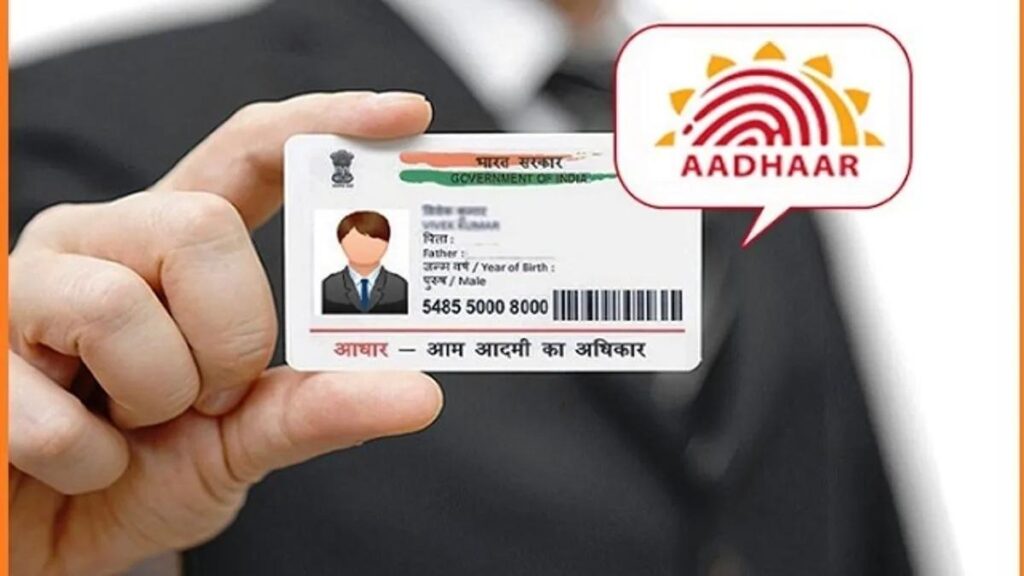
By Mark Freeman. As New Zealand’s digital identification system is being set up, it’s useful to examine the case study of India, which has had such a system for over 15 years. What has the Indian experience of digital ID been like? In particular, what are the risks of such a system? The Indian system, called Aadhaar, is the world’s largest biometric ID system. Its centralised database was introduced in 2010, and now around 95% of India’s population have Aadhaar IDs. To get their ID numbers and cards, people give demographic and biometric data, undergoing scans of their irises and fingers, and, more recently, face authentication. One stated aim of the Aadhaar system is to allow more people—especially the poor—to access government services, such as food rations, and bank accounts. Other aims include increased convenience and elimination of fraud through fake identifies. However, there are major downsides to the system. ID effectively compulsory Having an Aadhaar number is not mandatory, but in effect it’s now essential for most Indian people. “Aadhaar was supposed to be voluntary, but it quickly became clear that living without it would be very difficult for most. Today, it is as good as compulsory. Most social benefits are out of reach without Aadhaar,” says a group of concerned Indian citizens and organisations called Progressive International. The Guardian reports that Indians need Aadhaar numbers to buy houses or cars, get jobs, open bank accounts, receive government benefits, get sim cards and admit children into school. An Indian privacy and technology researcher, Usha Ramanathan, says Indian people are bullied and scared into getting an Aadhaar ID. Once you’re in the system, you can’t opt out, she says. Exclusion Millions of Indian workers have been excluded from food rations and other welfare benefits because of authentication failures in Aadhaar. It’s claimed that a number of Indians have died of starvation because they couldn’t connect their food rationing cards to Aadhaar. The Tribune newspaper says the exclusions are not isolated glitches but rather systemic flaws disproportionately affecting marginalised people. Security risks The Aadhaar system has experienced many security breaches of data. In one incident in 2018, the details of 1.1 billion Indians on the database were found to be being sold online. Mass surveillance Another major concern is that Aadhaar enables mass surveillance. The Indian government is creating a searchable database that will track every aspect of residents’ lives. An investigation by HuffPost in 2020 found the system will automatically track when citizens move between cities, change jobs, buy new property and register when family members are born, get married or die. In October 2025, the database was not yet complete. However, the Indian government is already conducting mass surveillance on its citizens. The Central Monitoring System, launched in 2013, lawfully intercepts people’s private conservations according to threat perception. In December 2025, the Indian government ordered telecommunications companies to preinstall a government app on mobile phones made in, or imported into, India. One politician called it a snooping app. Aadhaar vs. New Zealand’s digital ID system New Zealand’s emerging digital ID system has stronger privacy protections on paper than Aadhaar. While Aadhaar is a centralised government system, New Zealand’s ID system will be mostly decentralised, giving people more control of their data. The data will be stored in an app on users’ devices. However, the Indian system gives us clues about the potential dangers of the New Zealand system. Effectively compulsory Aadhaar started as voluntary service but is now effectively mandatory. This could happen here. New Zealand privacy watchdog PILLAR predicts that in future essential services like welfare, driver licences and banking will only be accessible through digital ID. New Zealand First has introduced a private member’s bill to ensure physical identification remains a valid alternative to digital ID. Security risks Even though New Zealand’s system is not centralised, like Aadhaar, it still poses risks of privacy breaches. The system’s authentication system runs on the US-based cloud infrastructure of Microsoft Azure and Amazon AWS. Both companies are subject to US law, including US government surveillance capabilities. Exclusion Similar to India, people in New Zealand who are on low incomes, who are without compatible smartphones or who choose not to get a digital ID could be marginalised. “Access to essential services should never depend on whether someone adopts a government digital ID,” says PILLAR’s executive director Nathan Seiuli. Surveillance and monitoring potential Also as in India, use of digital IDs in New Zealand could lead to increased state surveillance since repeated ID use will produce a trail of metadata of users’ actions. The New Zealand government is already sharing our intercepted communications with other “Five Eyes” nations; we don’t need to give them more of our data. For more information on New Zealand’s digital identification system, see here.
UN Agenda 2030
Return to NZ Govt Section INTRODUCTION While in principle non-binding and voluntary, it is arguable that no Agenda has more influence on New Zealand Law and Policy than the United Nations Agenda for the 21st century (UN Agenda 2030). The Sales Pitch Risks of Agenda 2030 Sounds good but… The Sales Pitch for UN Agenda 2030 UN Agenda 2030 is said to be a wide-ranging, voluntary programme of action that encourages nations to build capacity to collect and use environmental and socioeconomic information relevant to sustainable development. The 3 pillars of UN Agenda 2030 are Economy, Ecology, and Equity. It stops short of (and contains no text that requires) a global registry of individual people or of every single manufactured object. The emphasis is on national inventories and monitoring systems for natural resources and environmental pressures (forests, water, biodiversity, land degradation, chemicals, wastes, energy flows), development of indicators and better information sharing — not centralised global “control” of all persons and things. Click the following for Sustainable Development information The risks arise not from the document itself, but from: How governments operationalise those principles What trade-offs they prioritise How much discretion is removed from individuals and communities in the name of “management” In other words, the danger is not sustainability per se, but technocratic overreach. Bottom line The 17 Sustainability goals sound great… ‘No poverty’, ‘No hunger’, ‘Good health’ & ‘Quality Education’ among them. But look deeper and some of these things start to look like subversions as opposed to solutions. Agenda 2030, on the surface, reflects a legitimate, commonsense concern: finite resources and ecological limits.But how governments respond to that concern can either strengthen or erode freedom, resilience, and human dignity. The real question is not: “Is sustainability good or bad?” It’s: “Can we protect nature without treating people as problems to be managed?” New Zealand’s involvement in UN Agenda of the 21st Century (UN Agenda 2030) New Zealand was one of 178 countries to adopt the United Nations’s UN’s Agenda 21 at the Rio Earth Summit in June 1992. The most prominent New Zealand politician associated with Rio/Agenda-21 and the push for sustainable development policy at the time was National Party member Simon Upton, who was the Minister for the Environment and heavily involved in promoting it. Jim Bolger was Prime Minister at the time but Upton led the UN Agenda 21 drive. Is UN Agenda 2030 the control of everything? The ideal answer is ‘No’. Agenda 21 is officially a wide-ranging, voluntary programme of action that encourages nations to build capacity to collect and use environmental and socioeconomic information relevant to sustainable development. It stops short of (and contains no text that requires) a global registry of individual people or of every single manufactured object. The emphasis is on national inventories and monitoring systems for natural resources and environmental pressures (forests, water, biodiversity, land degradation, chemicals, wastes, energy flows), development of indicators and better information sharing — not centralised global “control” of all persons and things. But with that said… there are real trade-offs, risks, and behavioural tensions that can arise when governments translate Agenda-21-style sustainability goals into policy. These don’t mean the agenda is inherently malign, but they do mean implementation matters enormously. 1. Agenda 21 vs. how governments implement it Agenda 21 itself is: Non-binding Principle-based Explicitly respectful of national sovereignty Framed around “meeting present needs without compromising future generations” The risks arise not from the document itself, but from: How governments operationalise those principles What trade-offs they prioritise How much discretion is removed from individuals and communities in the name of “management” In other words, the danger is not sustainability per se, but technocratic overreach. Digital ID, if adopted, would become a cornerstone to such risks of government operationalising. 2. Core tensions with human behaviour and freedom A. Freedom of movement & access to land To protect ecosystems, governments may: Restrict access to forests, rivers, coastlines Limit hunting, fishing, foraging, or small-scale extraction Create protected zones where traditional or informal use is curtailed Tension:Humans evolved as mobile, adaptive foragers and builders, not as permit-based resource users. Policies that convert shared natural spaces into administratively controlled zones can feel deeply alienating, even if ecologically justified. Risk:People who rely on informal access (rural, Indigenous, low-income communities) often bear the heaviest burden. B. Behavioural regulation through incentives and penalties Sustainability frameworks often rely on: Pricing signals (carbon pricing, water pricing) Usage limits Monitoring and reporting requirements Tension:These systems assume people respond rationally to incentives, but humans also respond to: Identity Tradition Autonomy Fairness (or perceived lack of it) Risk:If people feel controlled rather than consulted, compliance drops and resentment rises — even if the policy goal is sound. C. Centralisation of decision-making Environmental protection often pushes governments toward: Central planning Expert-driven models Data-heavy oversight systems Tension:While ecosystems are complex, over-centralisation reduces local knowledge, adaptability, and personal responsibility. Risk:Nature becomes something “managed by the state” rather than something people feel custodial responsibility for — paradoxically weakening conservation ethics. 3. Material trade-offs (“added costs”) Yes — sustainability policies can impose real sacrifices, including: Higher costs for energy, transport, housing, or food Reduced access to cheap materials Slower infrastructure development Constraints on land use and building These costs are often: Diffuse (paid by many) Unevenly distributed Politically framed as “necessary” rather than openly debated Key risk:When sacrifices are framed as moral obligations without democratic consent, they provoke backlash and polarisation. 4. Potential contradictions with human nature Some genuine tensions include: Human tendency Sustainability constraint Desire for autonomy Regulation and compliance Short-term survival focus Long-term abstract planning Resource opportunism Controlled extraction Local adaptation Standardised rules Ownership and stewardship Collective or state control These aren’t arguments against sustainability — they’re reminders that policy must work with human nature, not against it. 5. The biggest real risk: moral certainty Perhaps the most serious danger is moral absolutism: “Because the goal is noble, the means are justified.” This mindset can: Shut down legitimate dissent Treat concerns about freedom as selfish or ignorant
Digital ID in New Zealand
Updated 15 October, 2025 The section below is a summary of the proposed Digital ID rollout in New Zealand. The Sales Pitch Risks of Digital ID Bad Government The Sales Pitch for Digital ID The Digital ID System is a national framework that lets people prove who they are online without repeatedly having to hand over full identity documents. So instead of handing over copies of your drivers license or passport every single time, you create a digital ID through an accredited provider, the provider then verifies your identity only once using official records and then when you log into a participating service it only confirms specific attributes such as your age or name rather than transferring all of that personal data to a new system. So the system itself is designed to limit data sharing and give users control and consent over what information is passed on. It is federated, which means there isn’t just one central database. Instead, several trusted providers operate under strict privacy accreditation and cyber security standards. Risks of Digital ID While digital ID limits data sharing, it still concentrates an enormous amount of power in one place; the government – as both the identity provider and the gatekeeper.. So in the future, New Zealanders may need to use the same ID to age verify themselves on major Internet Services like Google, Facebook etc, which effectively makes participation in the digital world dependent on your government issued ID. That means it wouldn’t just be about logging onto Government services but potentially every single online platform that requires proof of age or identity. And if the Government has the power to grant that access, it would also have the power to revoke it. The under 16 social media ban being sought out by Government effectively guarantees this capacity would be built into the digital ID. Giving any government the technical ability to cut anyone’s access off to the Internet is a dangerous precedent, one that could shift quietly from convenience to control. So far as security is concerned, potential hackers wouldn’t need millions of separate records, just the verification layer that connects all the systems. That means that if just one provider or verification key is compromised, it could cascade across all those platforms. What protections exist for private individuals if their data and access to banking etc is stolen? Bad Government COVID taught us that Government are willing to punish people even if those punishments have no genuine weight behind them. Consider the possibilities for Digital ID if age or identity verification becomes linked to all social interactions: The ability to bank or de-bank you depending on your political opinions or beliefs. The ability to impose time limited restrictions on things that ordinarily would be free for you to choose. The ability to mandate conditions (e.g. Vaccine) upon which access to movement or services are provided. The ability to control your purchasing decisions depending on the Government’s position on different things. The ability to censor you if your opinions or beliefs are in contrary to the Government’s on areas like health, education, environment, and humanity. While aspects of Digital ID may simplify certain areas of life, the conditions around the Digital ID matters. DIGITAL ID HAS ALREADY BEEN OPTED INTO (On some levels) Many are against digital ID but most have already agreed to it in some shape or form. It just wasn’t marketed as Digital lD, it was marketed as ‘safety’, ‘fraud prevention’, ‘age verification’, ‘security’, etc. And it was done with private Companies like Google and Facebook. The primary difference between what you may already have signed up with vs. what the Government are proposing, is that Government’s proposed model potentially ties everything you transact together under ONE umbrella. And the infrastructure and legislation for this proposal has been building for years. WHAT’S AT STAKE? Privacy – Every move will be traceable. Freedom – Access conditional on credentials. Security – A single breach – total exposure Equality – Offline citizens are completely left behind Democracy – Data driven governance without consent Convenience is the sugar coating, control is the pill beneath. Catherine Wedd’s Proposed Social Media Bill National Tukituki MP Catherine Wedd has put forward a new members’ bill to protect young people from social media harm by restricting access for under 16s. This particular measure – age restricted access, is one of the key bridges between a simple government ID and an all-pervasive, full surveillance tool of every individual. The proposed bill specifically being aimed at social media platforms, would enforce the following standards onto social media providers: Provider obligations: Social media platforms must take all reasonable steps to prevent under-16s from creating accounts. Enforcement: The Bill introduces penalties for non-compliance, with courts empowered to issue financial penalties against platforms that fail to uphold age restrictions. Defences for providers: Platforms can rely on reasonable verification measures to demonstrate compliance. Regulatory oversight: The Minister will have the authority to designate specific platforms as age-restricted and enforce compliance. Review mechanism: The law will be reviewed three years after implementation to assess its effectiveness and consider necessary amendments. WHAT THIS MEANS It means that not just under 16’s, but ALL adults, will be forced to go through a verification check when signing in to Social Media platforms. This means identity data connected to social media use, which would also means that every interaction made on platforms like YouTube or Facebook, is now directly traceable by government and your ongoing participation in those social media platforms also becomes controllable by Government. WHAT’S AT STAKE? Loss of online sovereignty – if Government doesn’t like or agree with the content you are posting or consuming, they can take your access rights away without notice. Loss of Refuge – Your ability to simply wind down and relax using social media platforms is compromised by knowing that even your leisure time is being ‘watched’. Personal Choice – Your ability to make genuine individual choices online are compromised by ‘big brother’
Top 10 reasons the Covid Vaccine was a complete scam

1. New Zealand’s Government knew from the very beginning that the Vaccine didn’t work and STILL pushed mandates Group of people activists with raised fists protesting on streets, strike and demonstration concept. Lorem ipsum dolor sit amet, consectetur adipiscing elit, sed do eiusmod tempor incididunt ut labore et dolore magna aliqua. Ut enim ad minim veniam, quis nostrud exercitation ullamco laboris nisi ut aliquip ex ea commodo consequat. Duis aute irure dolor in reprehenderit in voluptate velit esse cillum dolore eu fugiat nulla pariatur. Excepteur sint occaecat cupidatat non proident, sunt in culpa qui officia deserunt mollit anim id est laborum.Lorem ipsum dolor sit amet, consectetur adipiscing elit, sed do eiusmod tempor incididunt ut labore et dolore magna aliqua. Ut enim ad minim veniam, quis nostrud exercitation ullamco laboris nisi ut aliquip ex ea commodo consequat. Duis aute irure dolor in reprehenderit in voluptate velit esse cillum dolore eu fugiat nulla pariatur. Excepteur sint occaecat cupidatat non proident, sunt in culpa qui officia deserunt mollit anim id est laborum.Lorem ipsum dolor sit amet, consectetur adipiscing elit, sed do eiusmod tempor incididunt ut labore et dolore magna aliqua. Ut enim ad minim veniam, quis nostrud exercitation ullamco laboris nisi ut aliquip ex ea commodo consequat. Duis aute irure dolor in reprehenderit in voluptate velit esse cillum dolore eu fugiat nulla pariatur. Excepteur sint occaecat cupidatat non proident, sunt in culpa qui officia deserunt mollit anim id est laborum. Read More Read Less
Why we’re here

Why we’re here… Essentially… – We do not trust the Government (central and local) or the corporate news media – We believe Government works for interests outside of the New Zealand people – We believe both Labour and National are two sides of the same coin – We believe Government are purposefully increasing debt to expedite financial collapse – We believe the financial system is a scam and we believe they know it – We believe their goal is to institute a Digital ID linked financial system – We believe the public have a right to know how the Government is betraying them That is why we’re here One of our primary concerns is that New Zealand’s Corporate Media and Members of Parliament are working on behalf of Private Non-Governmental Organisations overseas who have goals that conflict with the wellbeing of New Zealanders. We believe that mainstream media have been captured by these NGO’s and are pushing their Agendas hard. We believe with that the goal of these agendas is control, and that their stated reasons such as ‘equality’, ‘safety’, and ‘protect the environment’ are purely deceptive. Using topics such as health crises, climate emergencies and identity politics to push their agenda, they are using these things to rally the support of citizens around the world to adopt their policies in the name of ‘safety’, ‘environmental protection’, and ‘equality’. Rather than allow for open public debate on these issues, Corporate Media and Government have adopted a strategy of avoiding that completely and attacking anyone who dares oppose or question it. For example, when face masks were encouraged during COVID-19, rather than ask “Do we even need them?”, New Zealand’s corporate media pushed a campaign of “What style mask are you going to wear?” and that immediately established the default narrative that masks were necessary, even though it was far from a clear cut answer. We are here because we are concerned for the present and future wellbeing of our families and communities. We do not trust New Zealand politicians and corporate journalists any more… This website is for anyone who has doubts and concerns about the Corporate Media & New Zealand Government, and are looking for alternative answers. Our coming together is merely a response to what we see as a very real threat against our collective future safety and well-being. Here’s the pathway to tyrannical power: Step 1 ✅ Install puppet politicians Step 2 ✅ Buy off the News Media Step 3 ✅ Manufacture crisis (e.g COVID) Step 4 In process of happening Collapse the economy Step 5 Development phase Install Digital ID ‘solution’ Weaponising the word ‘MISINFORMATION’ Since March the 26th 2020 (the first COVID lockdown), we have witnessed massively unjustified overreach and propaganda by the New Zealand Government and Corporate News Media, with much harm caused to New Zealanders as a result. There has been no concession that the lockdowns were wrong. No acknowledgement of guilt that they directly caused the cost of living crisis that exists today, among other social and economic problems Government are now taxing New Zealanders for. Instead, both the Government and Corporate News Media have brandished words such as “Conspiracy Theorist” and “Misinformation Spreaders” to discredit anyone who has dared called out their behaviour and motives. They have applied manipulation tactics and hidden vital information in order to avoid confronting their horrendous decision-making. They have attacked and attempted to take down anyone who has dared challenge their version of the ‘truth’ during Covid-19. Dr Sam Bailey, for example – made numerous videos during the pandemic highlighting the concern over mask efficiency, the covid vaccine, and the actual threat level of COVID-19 itself, and has since been proven correct yet still, faces a fine of $148,000 and other costs for ‘spreading misinformation’. This is simply unacceptable, from our point of view. If the Government genuinely had faith that they were the voice of truth – they would have opened up a balanced public televised platform for their best experts to debate Samantha Bailey and her team over their points of contention. The truth does not hide from questioning, and we believe the government took it’s preferred position of lockdowns and vaccine mandates because it fit with their political agenda, to disrupt the New Zealand economy, and expedite financial collapse for a digital ID system. The Justice System and Law Enforcement The Government appear to be anchored by a Justice system that re-enforces the State’s will via the written laws of Government, irrespective of how nonsensical or tyrannical those laws may be, backed by a corporate Police Force who are on hand to intimidate or arrest anyone who dares question government policy. COVID-19 illustrated the extent of this level of corruption and it is simply unacceptable. In other words, we believe there is no justice in our current justice system and we see no pathway to justice via the existing system. We see a Corporate News Media who have massively betrayed the New Zealand Public by continuing to hide important factual information, while incessantly spreading fear and nonsensical agendas, like the fraudulent COVID-19 scam, and the mightily harmful mRNA Vaccine campaign that came with it. WHAT WE WANT We want a free and open New Zealand where individuals are empowered to create and support one another without Government overreach inhibiting our ability to protect ourselves, our environment, and our loved ones around us. We do not want our wellbeing threatened by any Government’s malicious decision-making or any News Media’s intentional propaganda campaign. We want the New Zealand Government and Corporate News Media held to account for the damage they have caused in harming people and hiding information. We believe their actions since the rollout of COVID-19 have been very arguably criminal. We would encourage the New Zealand public to embrace the possibility that they have been betrayed mightily by the New Zealand Government and Corporate News Media for the sake of a worldwide political agenda. Our trust in them is their